


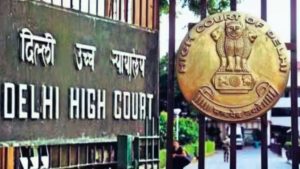
 The increasing focus on food labelling and product descriptions in India has led to a re-examination of the regulatory boundaries of what can be said about a product. The term ‘Energy Drink’ is under the microscope for compliance with relevant regulations, consumer perception, and the extent to which such a claim is permissible under food safety laws. In that context, the Delhi High Court is considering the extent of interim relief available to a manufacturer challenging the regulatory directions, particularly regarding the sale of existing stock and the manufacture of fresh batches.
The Delhi High Court Division Bench has refused immediate relief to PepsiCo India Holdings Private Limited, which had sought permission to continue manufacturing beverages described as ‘Energy Drinks’. The Court, however, directed a Single Judge to record specific reasons for restricting the company from manufacturing fresh batches of its Sting Energy and Adrenaline Rush products under the disputed label. The order, dated October 12, 2026, leaves the manufacturing restriction in place pending further consideration.
The Division Bench was hearing PepsiCo’s appeal against an order dated October 6, 2026, which allowed PepsiCo to sell its existing stock of beverages labelled “Energy Drink” but did not allow further manufacturing under the same description. The Bench noted that the Single Judge had not given specific reasons for imposing this restriction, particularly when similar relief had reportedly been granted to Red Bull India Private Limited in separate proceedings.
The dispute arose from regulatory orders of June 30, 2026, which directed PepsiCo to remove the ‘Energy Drink’ description from its products on the grounds that it would amount to misbranding and misleading claims. The orders were accompanied by communications to the relevant state authorities for enforcement.
PepsiCo challenged the regulatory directions before the Delhi High Court in PepsiCo India Holdings Private Limited v. Union of India & Ors., W.P.(C) 14670/2026, contending that the directions were issued without a show-cause notice or an opportunity of hearing. It also referred to an earlier advisory issued by the FSSAI which reportedly permitted the use of the term ‘Energy Drink’ for products in certain food categories.
On October 6, 2026, the Single Judge stayed the regulatory orders of June 30, 2026, and the consequential communication dated July 17, 2026, until the next hearing. The Court permitted PepsiCo and its bottlers or contractors to sell stock already manufactured with the disputed description, subject to keeping an account of that stock. The order was very clear that the interim protection would not extend to any further manufacture of products bearing the ‘Energy Drink’ description.
Challenging this restriction, PepsiCo filed a Letters Patent Appeal, LPA 839/2026, before the Division Bench. During the appeal, the company argued that although the Single Judge had granted protection from the regulatory directions, the order did not permit it to continue manufacturing beverages under the same label.
PepsiCo also relied on the September 29, 2026, order in Red Bull India Private Limited v. Union of India & Ors., W.P.(C) 14413/2026, contending that the same relief had been granted to Red Bull in proceedings involving the same regulatory regime. They argued that judicial discipline required consistent treatment of similarly situated parties and that the restriction imposed on its manufacturing operations should be reconsidered.
The respondents opposed the appeal, raising a preliminary objection to its maintainability by relying on the Supreme Court’s decision in Shah Babulal Khimji v. Jayaben D. Kania and Another (1981). They also submitted that there were grounds for not granting the interim relief to allow further manufacturing. The respondents indicated that they were considering applying to modify the order in the Red Bull proceedings, but the Division Bench observed that no such application had been filed.
The Division Bench declined to examine the merits of the dispute, noting that the question of whether to grant or confirm interim relief was still before the Single Judge. However, it expressed a prima facie view that specific reasons had not been recorded for restricting PepsiCo from manufacturing or bottling products bearing the disputed description, especially when similar permission had apparently been granted in the Red Bull case.
The Bench directed the Single Judge to give reasons for paragraphs 12 and 13 of the 6th October order (the order relating to the sale of the existing stock and the restriction on further manufacture). The exercise was to be completed within one week. The appeal was disposed of with those directions and the Bench was very clear that it had not passed upon the substance of the matter at all.
The order underscores the importance of reasoned judicial decisions when granting or restricting interim relief, particularly where parties rely on comparable orders involving similarly situated entities. It also draws a commercial distinction between selling existing stock and manufacturing new stock under a disputed product description.
Authors: Manisha Singh and Kratika Patel